Gatherings
Our first English Conversation Club meetup in Düzce
Inside Atelier Düzce’s first English conversation meetup: introductions, five speaking prompts and ways to turn an answer into a conversation.
Sometimes, while we wait for the right English word, we give up on what we wanted to say. That was our starting point when we put together Atelier Düzce’s first English Conversation Club gathering: give everyone a manageable way into the conversation.
Telling a group of people who have never met to “just speak English” leaves a lot of work to the first speaker. A question, a game or a sentence to complete gives them somewhere to begin. That is why we chose conversation prompts as a central part of our first meetup.
A short introduction is enough to begin
We designed the opening around a welcome, an introduction to the club and a brief round of introductions. You can start with a few sentences about yourself: where you are from, how your day has been or something you are interested in at the moment.
Our invitation is to join in with the English you have. You can pause to think, ask for a word or try your sentence again. Listening to someone else and giving them time to answer are part of the conversation too.
Five prompts, five different conversations
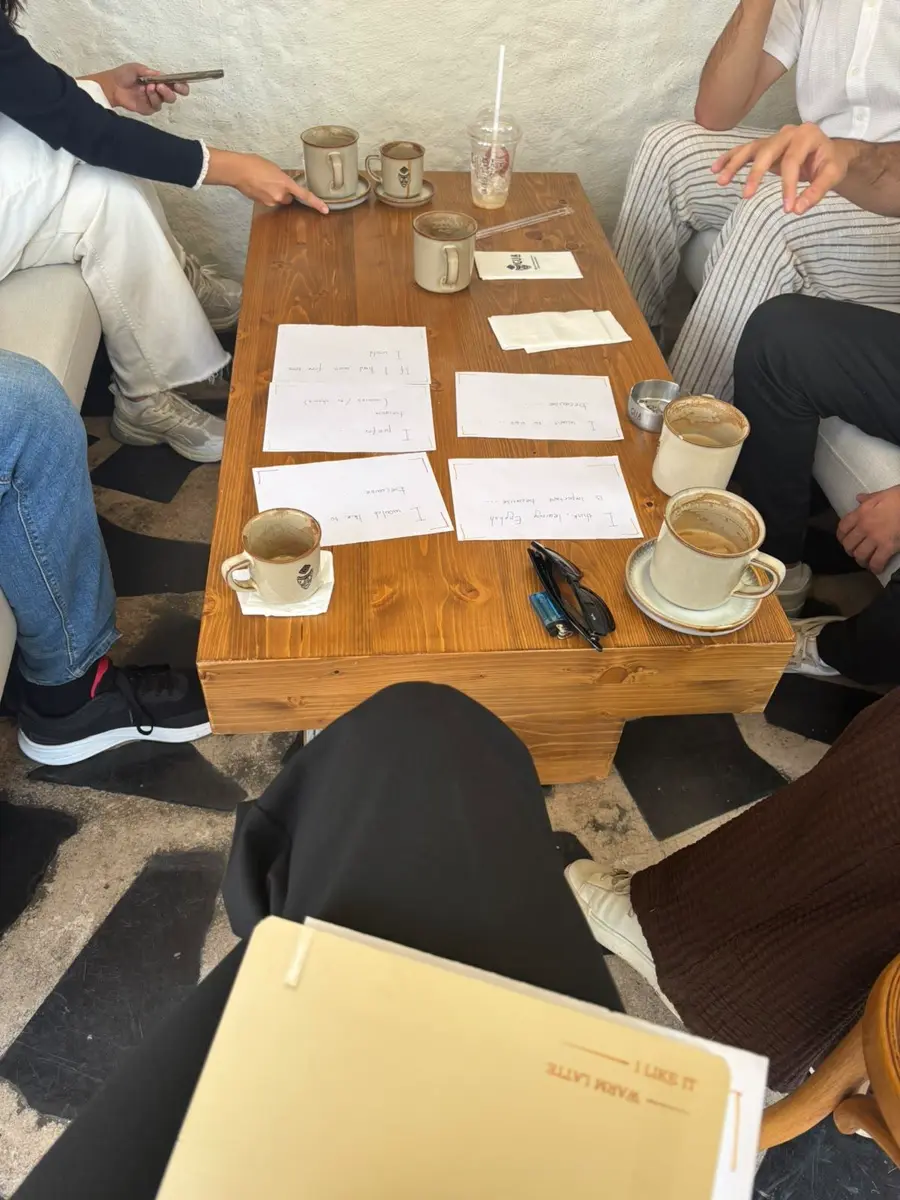
The sentence starters we used at the first gathering drew on everyday interests: places we would like to visit, things we enjoy watching, skills we want to learn and what we would do with more free time.
- I want to visit … because …
- I prefer … because … (movies / TV shows)
- I would like to learn … because …
- If I had more free time, I would …
- I think learning English is important because …
One of the most useful words in these prompts is because. It invites you to explain a preference. “I want to visit Italy” gives someone a fact about you. Why you want to go could lead to a conversation about food, architecture, a childhood memory or a film you have watched.
The same prompt can also lead to very different answers. We share a starting point without having to say the same thing. That leaves room to get to know each other while practising English.
How does an answer become a conversation?
Completing a sentence does not have to end your turn together. Pick one detail in the answer that interests you and ask about it. A travel prompt, for example, could develop like this:
“I want to visit Japan because I’m interested in the food.”
“What would you like to try first?”
The follow-up comes from what the other person has just said. You do not need to invent a new topic each time; you can explore something you have heard. Try this with a practice partner: an answer, a reason and a follow-up question.
Making room for games and smaller conversations
The first meetup programme also included Vampir Köylü, a social deduction game, alongside conversation in two smaller groups and a short energiser. We included these activities to create different reasons to speak. Introducing yourself, explaining an opinion and trying to persuade someone during a game each ask you to use language in a different way.
We also made space in the closing session for feedback about the gathering and the club. What people are curious about, and what they want to share, matters to the kind of community Atelier becomes.
What can you bring to your next conversation?
Choose one of the prompts and give your own answer. Then add something: a reason, a small example or a question for the other person. If you need words you do not know yet, make a note and return to them afterwards. Our Frankenstein Sentence approach explores how to work with those missing pieces.
If you are looking for a way to practise English and meet people in Düzce, visit our English Conversation Club page. You can follow @atelierduzce for the next meetup announcement or send us a message.